Documentation cleanup loops
Providers and managers lose time when notes need repeated clarification, reformatting, or follow-up before they are usable for coding and billing.
In healthcare, accuracy is everything. A single AI error can trigger a compliance violation, a denied claim, or a patient safety risk. That is why our healthcare operations team manages each workflow and uses advanced AI to move faster without losing expert oversight.
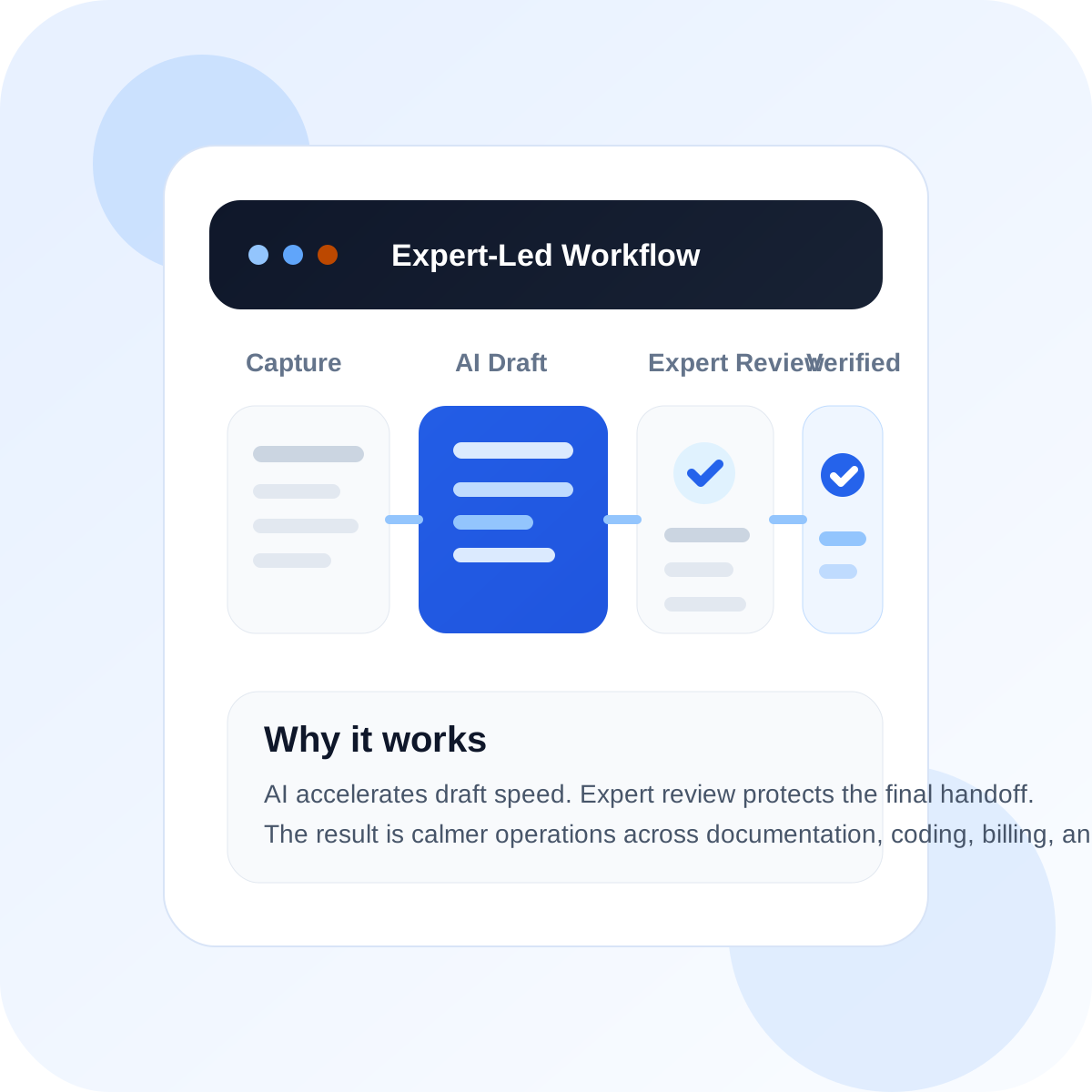
This walkthrough section is here to show the product-side experience behind the operating model. Instead of a generic healthcare scene, it now anchors the page in the actual platform environment your team would evaluate.
It fits here because the About page explains the expert-led model itself: how work moves, where review happens, and how the platform helps documentation, coding, billing, and payroll stay coordinated.
Large language models generate plausible-sounding text, but plausible isn't the same as correct. In clinical documentation, a subtle error in laterality, dosage, or diagnostic specificity can cascade into compliance failures, denied claims, and audit exposure.
Anot Health solves this by putting veteran documentation specialists, experienced medical coders, and senior billing experts in the driver's seat. They use advanced AI to automate raw drafts, but they carry out the actual clinical operations themselves. Our experts review, correct, and refine every output before delivery.
Our experienced team catches context issues, terminology gaps, and clinical nuances that AI misses.
Every note and code is reviewed against CMS, OIG, and payer-specific documentation requirements.
Human corrections feed back into your practice's AI model, making it more accurate over time.
Most operational problems do not start with one dramatic error. They start with small inconsistencies that pile up across teams, systems, and handoffs.
Providers and managers lose time when notes need repeated clarification, reformatting, or follow-up before they are usable for coding and billing.
AI-only output can sound convincing while still missing laterality, specificity, payer logic, or required supporting detail.
When one team receives output they cannot trust, every downstream step slows down, including coding review, claim prep, payroll reconciliation, and reporting.
Anot is built to support the handoffs between care delivery and business operations. Instead of solving documentation in isolation, we look at what the note needs to support downstream: coder confidence, claim quality, compensation inputs, and audit readiness.
We are a strong fit for private practices, specialty groups, and multisite organizations where speed matters, but trust matters more. If your teams are juggling charting backlog, denial pressure, coding complexity, or finance cleanup, the expert-led model becomes meaningful very quickly.
Need fewer note bottlenecks and less provider after-hours work.
Need cleaner documentation and coding support before claims go out the door.
Need payroll and reporting inputs that do not require last-minute reconciliation.
The Anot model gets stronger when the operating layer keeps learning from real implementation, real review work, and real downstream friction. That is where our current energy goes.
We keep improving how rollout steps are sequenced so providers, operators, coders, billers, and finance leads each know what changes when.
We care about whether the next team has to second-guess the work. That means validation keeps getting tuned around handoff quality, not only output speed.
As complexity grows across specialties and practice structures, we keep extending the model around documentation patterns, coding detail, and operational fit.
Automation is useful only when the result is dependable enough for real clinical and financial decisions.
We adapt to provider preferences, specialty context, and team structure instead of forcing a generic process.
The best systems reduce friction for the next team, not just speed up the first step.
Request a side-by-side comparison: AI-only workflows vs. Anot Health's expert-led operations. See how our veteran team puts the cherry on top.
Get a Comparison Demo