Province-specific diagnostic tables
OHIP 3-digit codes, the MSP diagnostic index, and AHCIP listings do not map one-to-one. We code to the plan that is actually paying the claim.
Anot Health puts experienced coding and compliance specialists in charge of your diagnostic and procedural mapping — pairing AI-powered clinical text extraction with certified human review to ensure audit readiness against the provincial diagnostic table and fee schedule that actually pays your claims.

We bridge the gap between complex physician narrative notes and rigorous provincial diagnostic codes.
Your claims are coded to the table your plan actually recognises — OHIP 3-digit diagnostic codes, the ICD-9-based MSP diagnostic index, AHCIP listings — and matched to the correct fee schedule item.
Where your clinic abstracts to CIHI, we apply ICD-10-CA diagnostic codes and CCI intervention codes for DAD and NACRS — the facility standard, kept separate from your provincial billing.
Every high-complexity encounter is backed by documented clinical rationale in the EMR note, ensuring complete defense during College peer assessments and ministry audits.
Medical coding rarely fails on the obvious cases. It fails on shadow billing nuance, premium eligibility, and diagnostic specificity that varies by province — so a certified reviewer checks every high-complexity encounter before it is submitted.
Our specialists read the clinical story, not just the diagnostic keyword, before selecting the code your province's plan recognises.
Each encounter is checked against the fee schedule and diagnostic table that actually applies — OHIP, MSP, AHCIP or the relevant plan.
High-complexity decisions are documented in the record so the reasoning survives a College peer assessment or ministry review.
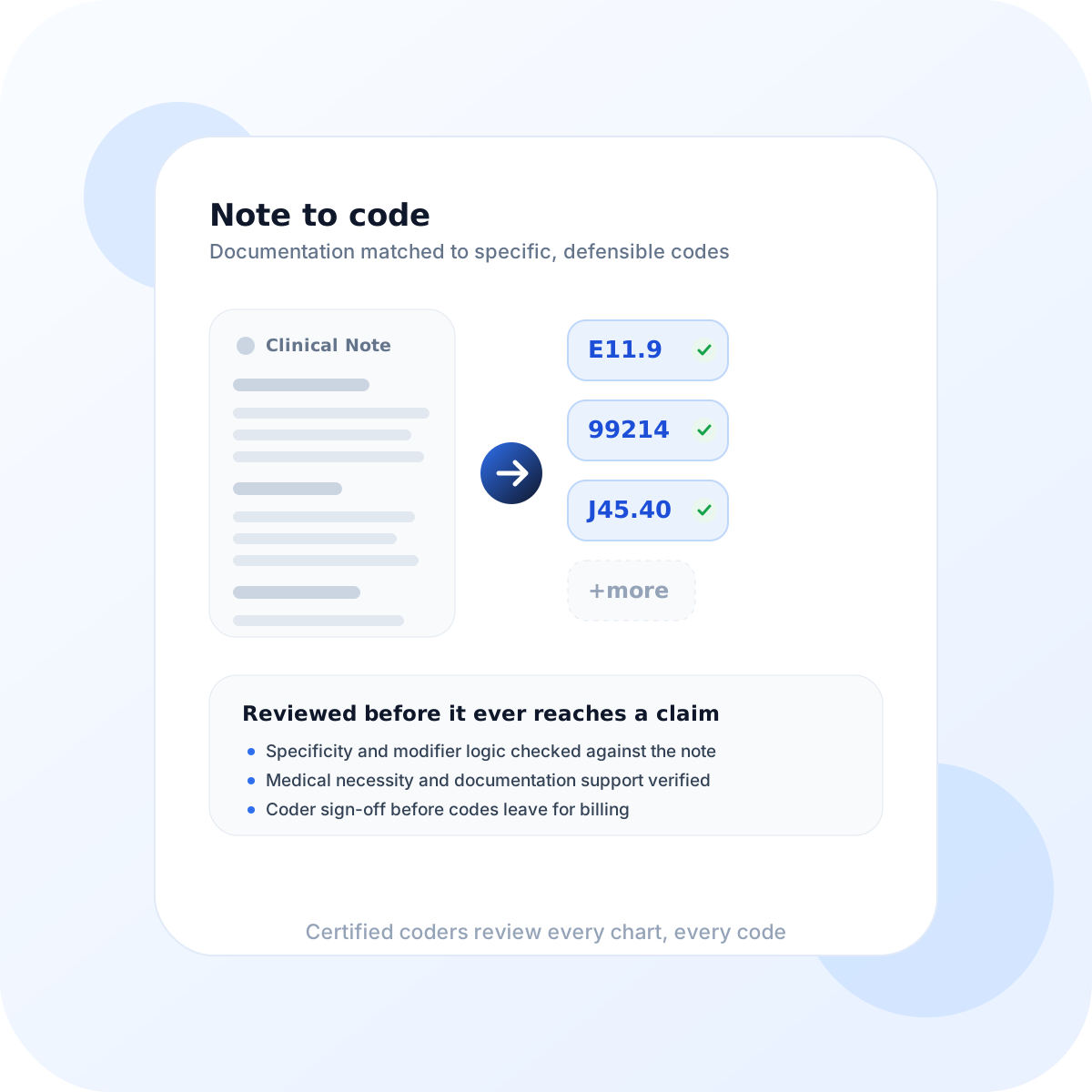
The same encounter can be coded three different ways across three provinces. That variation is where unreviewed automation quietly costs a clinic money.
OHIP 3-digit codes, the MSP diagnostic index, and AHCIP listings do not map one-to-one. We code to the plan that is actually paying the claim.
Capitation, FHO/FHG shadow billing, and after-hours or special-visit premiums are routinely under-claimed when nobody is reviewing eligibility.
Expert review reduces risk before an encounter becomes a ministry recovery, a clawback, or a College peer assessment finding.
Catch diagnostic mismatches, missed premiums, and eligibility gaps before the claim leaves your EMR.
Route provincial nuance to specialists who code that plan daily, instead of forcing edge cases through automation.
Rejection patterns feed back into the workflow, so the same provincial error stops recurring.
Most provincial rejections trace back to three checkpoints that look minor in the chart but become expensive at reconciliation.
We check whether the documentation actually carries the diagnosis being billed, rather than assuming the chart and the provincial code already agree.
After-hours, special visit, chronic disease management, and age-based premiums are the most commonly missed revenue in primary care.
The coding layer should leave your clinic safer before submission, reassessment, or a College peer assessment — not just faster.
Common questions from clinical directors and group practices.
Each province maintains unique diagnostic coding rules (for example, OHIP uses a simplified 3-digit diagnostic table, while BC MSP and AHCIP use ICD-9-based systems). Our certified specialists code specifically for your province's ministry requirements.
Only where it belongs. ICD-10-CA and CCI are CIHI's facility standards, used when a hospital or day surgery unit abstracts to DAD or NACRS. Physician claims to a provincial plan are not coded that way — your office billing goes out against the plan's own diagnostic table (OHIP, MSP, AHCIP or your provincial equivalent) and its fee schedule. We keep the two workflows separate so neither one contaminates the other.
Yes. We support CIHI DAD (Discharge Abstract Database) and NACRS (National Ambulatory Care Reporting System) abstraction standards for surgical and hospital-affiliated clinics.
Connect with our clinical coding team to review your practice's current coding profile.