01
Discovery
Map the visit and documentation style
We look at encounter volume, note structure, specialty terminology, and provider variation before configuring support.
Anot Health isn't a generic medical dictation tool. Our seasoned specialists and advanced AI helpers are meticulously trained on the specific clinical pathways, terminology, and billing codes of over 50 medical specialties.
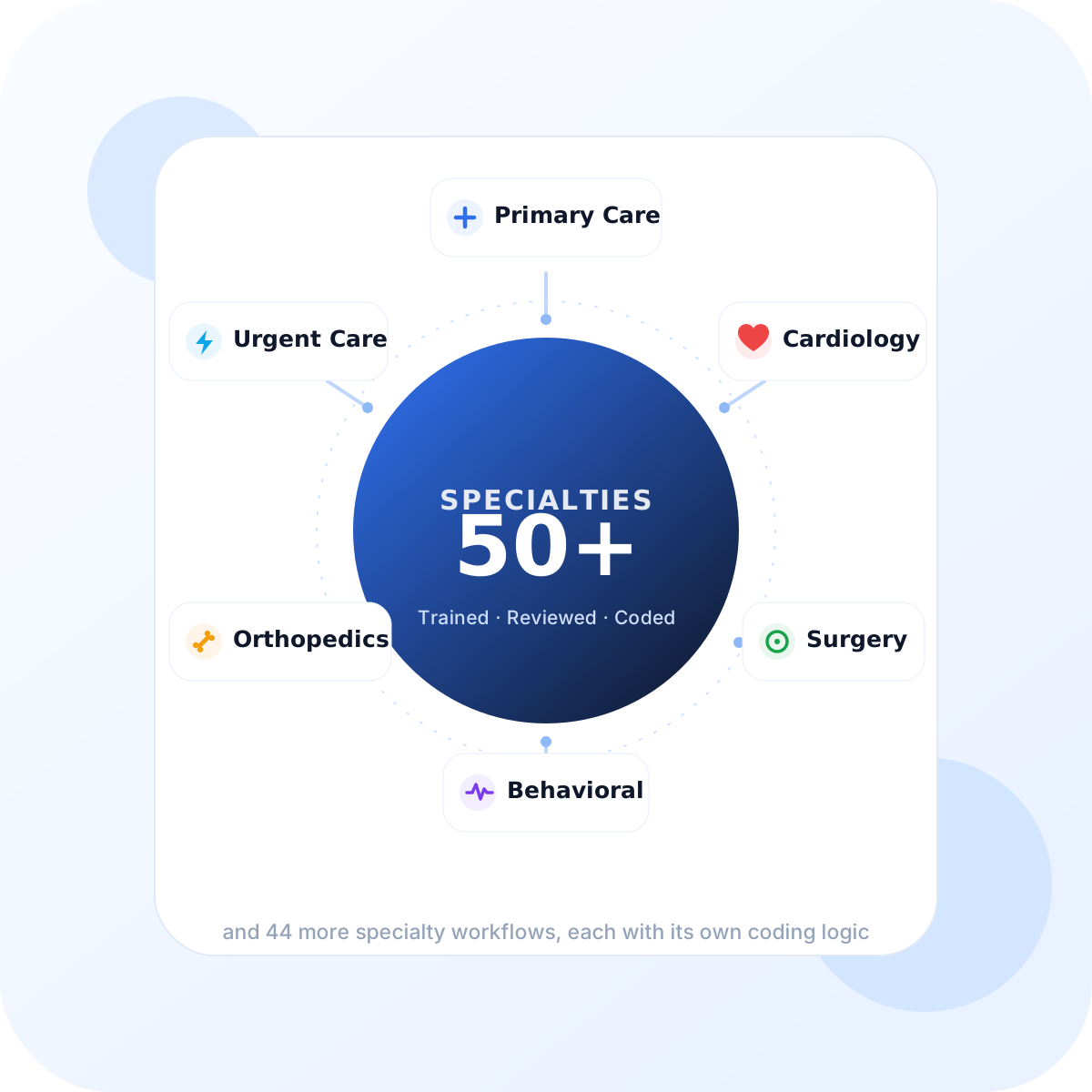
We support workflows where terminology, coding rules, and documentation structure vary meaningfully by specialty.
High-volume E&M documentation, chronic care management coding, and AWV/preventive visit workflows optimized for family and internal medicine.
Complex procedural coding for catheterizations, stress tests, and echocardiograms. HCC-optimized risk adjustment for heart failure and AFib management.
Surgical and post-operative documentation, DME billing automation, and workers' compensation claim support for musculoskeletal practices.
Fastest turnaround documentation and claim submission for high-volume walk-in clinics. Built for speed without sacrificing accuracy.
Time-based psychotherapy coding, psychiatric evaluation documentation, and integrated behavioral health billing for FQHC and private practices.
Detailed operative reports, complex procedural coding with modifier logic, and global period management for inpatient and outpatient surgical workflows.
A generic medical workflow may produce a readable result, but that is not enough for specialty care. Nuance shows up in exam detail, operative context, modifier usage, timing, and how the note supports downstream coding and billing decisions.
Family medicine, internal medicine, urgent care, preventive care, and longitudinal visit workflows.
Cardiology, behavioral health, gastroenterology, endocrinology, pulmonology, and more.
Orthopedics, general surgery, pain, multispecialty procedural practices, and related post-op documentation needs.
Different specialties require different charting logic, vocabulary, and levels of detail.
Better specialty alignment helps documentation support more accurate code selection.
Providers across the same group can still keep their preferences without losing workflow control.
Different specialties need different documentation patterns, review logic, and downstream coordination. Use the explorer to see how Anot adapts to that reality.
Primary care teams need consistency across preventive care, chronic care, acute visits, same-day charting pressure, and a high volume of E&M documentation.
Cardiology workflows often demand stronger support for procedural detail, risk-adjustment context, diagnostic testing, and coding nuance that affects reimbursement quality.
Orthopedic groups often need better structure around operative context, follow-up notes, imaging references, DME-related billing logic, and case-by-case documentation clarity.
Behavioral health teams need charting support that respects session context, treatment structure, time-based coding logic, and the balance between narrative quality and operational speed.
The question is rarely just "Can you support this specialty?" The real question is how the workflow, documentation style, coding nuance, and handoffs need to be set up for that specialty to work well.
We look at encounter volume, note structure, specialty terminology, and provider variation before configuring support.
Specialty fit also depends on whether the note supports the reimbursement, compliance, and operational handoffs that come next.
We use real workflow examples to tighten structure, terminology, and specialty-specific review logic before scale-up.
The specialty model should keep getting more precise after launch, not flatten back into generic healthcare language.
These are common concerns for teams deciding whether a more specialty-aware workflow is worth the switch.
Yes. Specialty-aware support still allows for provider-level variation in structure, emphasis, and workflow preference where that matters operationally.
Those are often the best candidates for a more tailored workflow, because generic support breaks down faster when complexity and nuance increase.
We look at the downstream impact too, including how documentation quality affects coding specificity, billing support, and operational follow-through.
Usually a clearer view of where generic workflows are creating risk today and what a better specialty-aware operating model would need to support.
We support 50+ specialties and subspecialties. Contact us to discuss how our expert teams and advanced AI helpers tailor to your specific clinical workflows.
Inquire About Your Specialty